
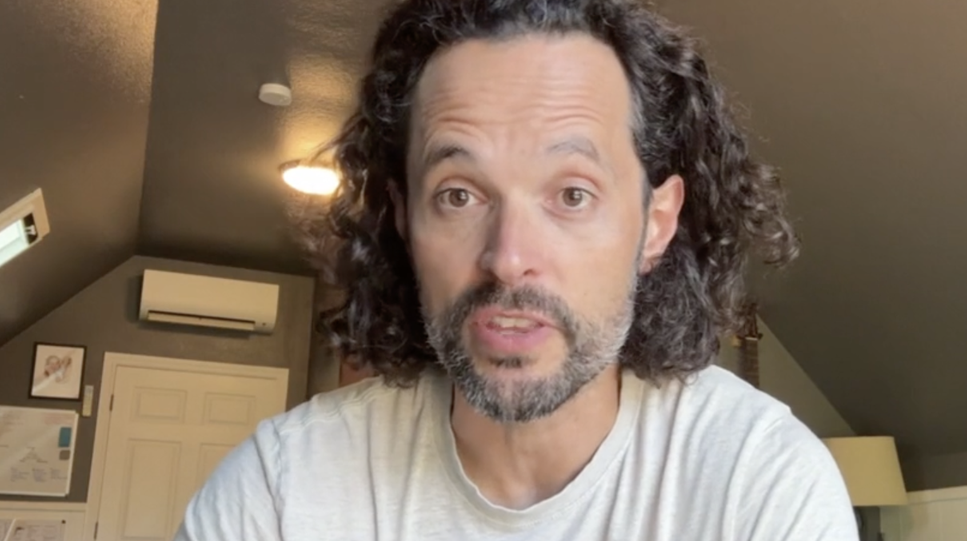
Angelo Santiago
Cohort 01
Angelo saw how an operator could help him prepare, follow up, and serve his men's groups with more consistency.
Build an AI operator that understands your business, keeps working after the conversation ends, and gives you back the time to focus on what only you can do.
Chatbot answers. Operator works.
8-Week Boot Camp for Digital Product Creators
This five-person cohort is fully enrolled · Future applications are open
Questions? Email jacques@theonlinecourseguy.com.
Not a chatbot. Not a fancy prompt. An actual AI operator running on a dedicated machine in my house, 24 hours a day.
His name is Rocky. Here's what he did this morning before I woke up:
Sent me a morning briefing with my top 3 priorities for the day
Drafted replies to three student emails in my voice
Ran a health check on all my dashboards and servers
Flagged an ad campaign that needed my attention
By the time I grabbed my coffee, the boring stuff was handled. The strategic stuff was summarized. And I got to spend my morning on work that actually matters.

I'm not telling you this to brag. I've been selling digital products for over 10 years. Between two brands — over $7 million in digital product revenue. And this is the single biggest shift I've made since creating my first course.
Student emails. Content repurposing. Scheduling. Bookkeeping. Social media. Ad monitoring. The list doesn't shrink. It grows.
You've probably tried ChatGPT. Maybe Claude. Maybe a handful of AI tools. They're useful. But they still leave you doing the work.
You open the app.
Write the prompt.
Copy the result.
Decide what to do next.
That's assistance.
Not an operator.
“None of it is hard enough to hire a specialist for. But all of it is important enough that ignoring it costs you.
Student replies, partner threads, and support decisions wait for you.
The important follow-up, review, and admin loops slip quietly.
The big moves wait while you clear the operational backlog.
The business grows, but your list grows faster.
Every tiny choice steals attention from your best judgment.
Monitoring, follow-up, and review loops are easy to postpone.
Not because they're lazy. Because they're spending their best thinking on work that shouldn't need their attention.
It runs the systems so you can focus on the work that actually grows your business.
Four months ago I was exactly where you are.
Curious. Overwhelmed. Stuck in ChatGPT.
I thought that was AI. It wasn't.
Here's what I've learned since then.
Open ChatGPT, ask a question, copy the answer. Useful, but you're doing all the work.
Every single time.
Zapier, Make — connect tools, things trigger automatically.
But it's rigid. The second anything changes, it breaks.
AI that takes actions. But you still babysit it. It's like an employee who can't start their day without you standing over their shoulder.
Lives on your machine. Runs 24/7. Drafts emails in your voice, monitors campaigns, watches dashboards. Every morning, a briefing tells you what needs your attention — and what's already handled.
When I found level four, I knew levels two and three weren't going to cut it.
Automations were too fragile. Agents were too needy.
I needed something that could run independently.
And once I set that up, everything changed.
I wake up. There's a briefing on my phone telling me exactly what to focus on today. Student emails that came in overnight? Already drafted in my voice — I just review and approve. My revenue dashboard is updated. If an ad campaign is underperforming, Rocky's already flagged it. Things that used to sit on my to-do list for weeks? Done.
It's not that the operator replaces me. It gives me back the part of my brain that was constantly tracking loose ends.
I sit down with my coffee and I actually get to work on the stuff that moves my business forward. Not the stuff that just keeps it running.
And at the end of the day, I feel like I actually accomplished something. Not because I worked more hours, but because the hours I worked were spent on things that matter.
Here's the other thing nobody talks about: when you're not buried in admin work, you start seeing opportunities you were too busy to notice. Revenue you were leaving on the table. Problems that were quietly costing you money. An operator doesn't just save you time — it gives you the visibility and headspace to actually grow your business.
You don't leave with a course library. You leave with a working operator and the muscle to extend it. Here's what yours will do by week eight.
A morning brief with what matters, what's broken, and what's on you to decide. Written in your voice, not a dashboard.
Reads everything. Drafts replies in your voice. Flags only what genuinely needs you. Learns from how you edit it.
Handles tier-one tickets end-to-end. Escalates the messy ones with context already gathered. Doesn't hallucinate refunds.
Drafts, edits, and repurposes — trained on what you've published, not on the internet's average opinion.
Watches the numbers that matter. Tells you when something drifts. Sends a clear hypothesis, not a panic alert.
Holds context on every part of your business so when you ask "should I…" you get a real answer, not a Wikipedia summary.
See how creators from our first two cohorts are using AI operators to reclaim time, simplify operations, and build systems that keep working.
Angelo saw how an operator could help him prepare, follow up, and serve his men's groups with more consistency.
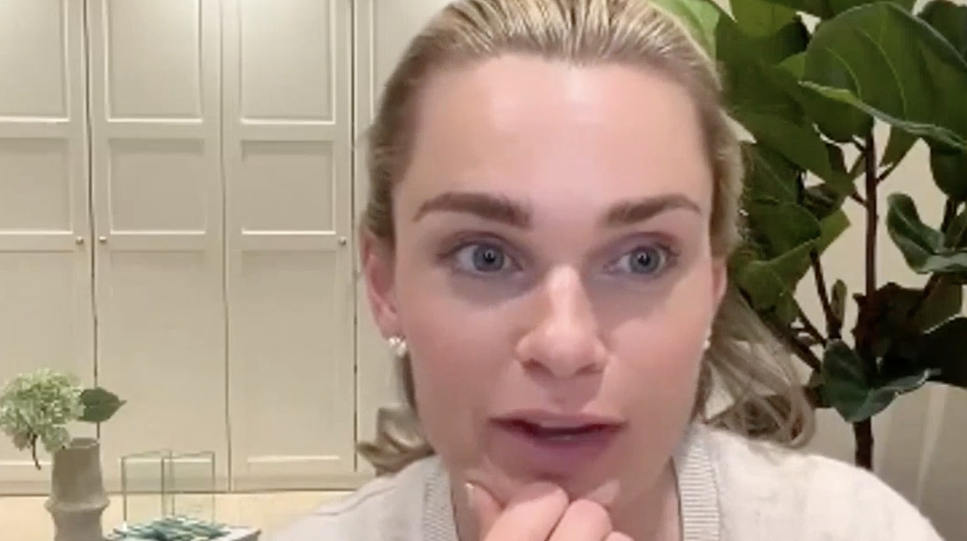
Helene came in overwhelmed by AI. By the end, she was using Poppy for audits, morning briefs, launch research, email analysis, and team handoffs.
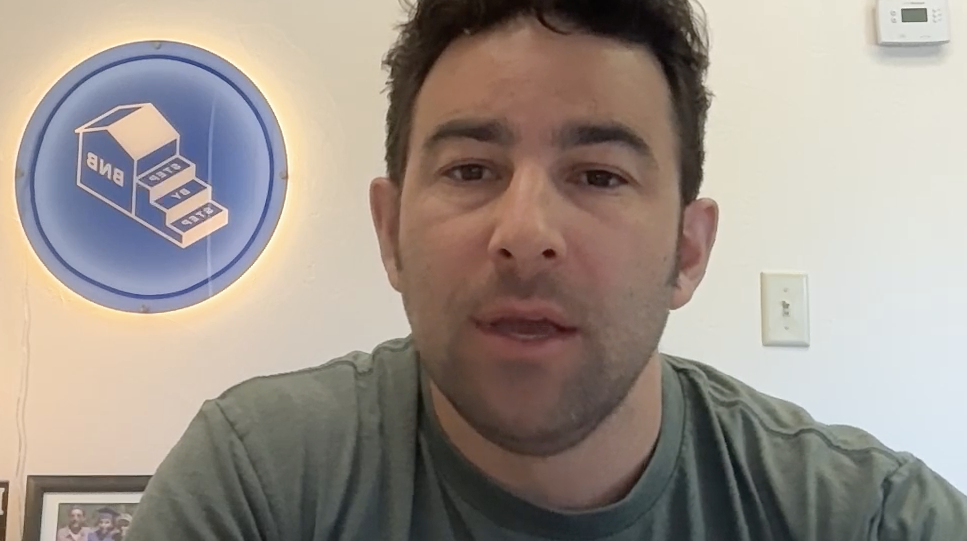
Jake turned real Airbnb operations into repeatable tools he can own, improve, and keep using across the business.
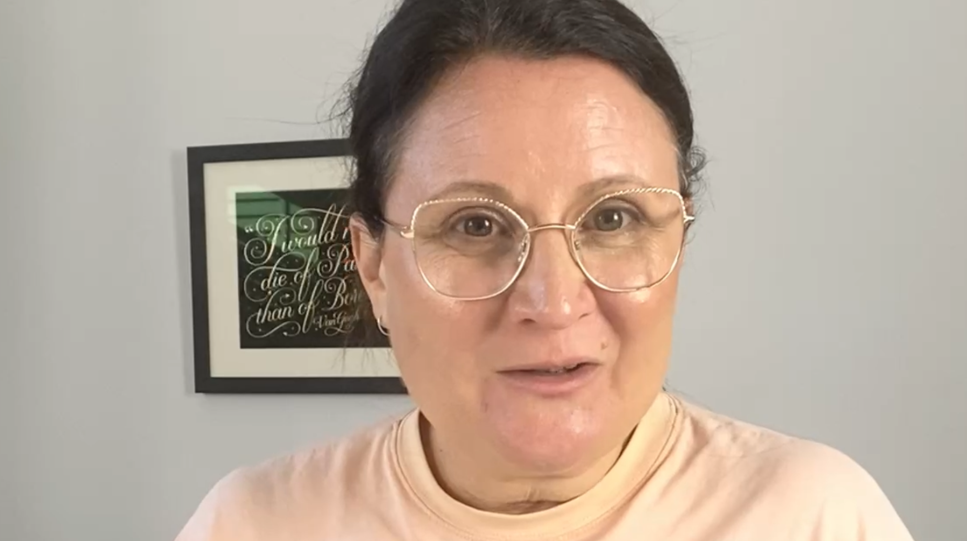
Nicole now runs a more efficient business and finally has the systems in place to support the vision she's been building.
Sends you a daily briefing so you know exactly what to focus on
Drafts responses to students in your voice
Handles the repetitive tasks you've been meaning to delegate for years
Monitors your business and alerts you when something needs attention
Runs dashboards so you always know where things stand
Wakes up before you do and gets to work
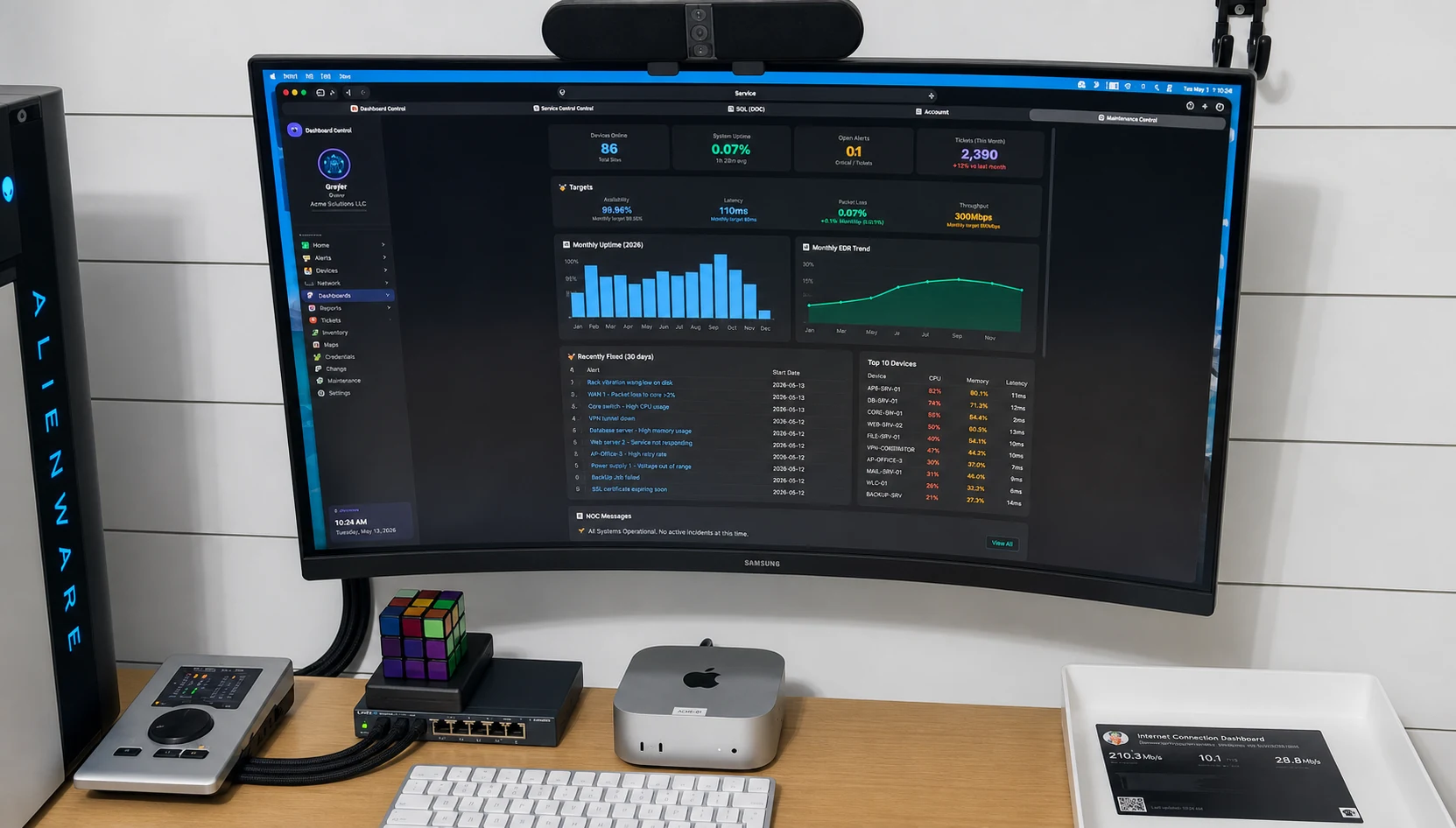
It runs on a Mac mini sitting in your office. No vendor lock-in. You own it.
An operator doesn't replace you. It's the other half of a working system, and the split of responsibilities is deliberate.
Taste and standards. What good looks like in your business, and what isn't good enough to ship.
Judgment. The calls that carry real stakes: offers, pricing, people, direction.
Relationships. Your customers, your partners, your voice. Trust isn't delegated.
Correction. You review the work and set the standard, and the system gets sharper every time you do.
Memory. The decision from last Tuesday, the customer's exact words from three weeks ago, the file name, the context you'd have to go dig for.
Continuity. Work keeps moving after the conversation ends. The meeting finishes and the replay is uploaded before you've poured a coffee.
Repetition without boredom. Twice a day, every Friday, after every meeting. Machines don't get tired of the loop.
The last 10%. The operational glue that stalls most projects: check the link, close the loop, follow up, archive the thing.
The split is simple. If the work needs taste, values, relationships or final judgment, it stays with you. If it's repetitive, context-heavy, tool-heavy or easy to forget, it goes to your operator.
Humans bring judgment.
Operators bring continuity.
Together, good team.
I've been running digital product businesses for over 10 years. Piano In 21 Days has over 10,000 students. I run The Online Course Guy, where I've coached hundreds of course creators. Between the two, over $7 million in digital product revenue.
Here's the rare part. I actually started out as an engineer, so I understand how this technology works under the hood. But I left that world more than ten years ago to build businesses. Most people who understand the tech have never run a real business. Most people who run a real business are scared of the tech. I sit in both, and that is exactly what this takes.
That matters. The person teaching you this should understand YOUR business. I know what it's like to end the day feeling like you worked the whole time but didn't actually move the needle. I know what it's like to have a to-do list that just grows. I built my operator to fix that — and it did.
"I want to learn from someone who will tell me how to set it up for a digital product business, not just any business."
That's what this is.
And here's one more thing. Most people who try setting up an AI operator get frustrated and quit within the first couple weeks. The setup is one thing — keeping it running and actually useful is another.
I figured out a specific management workflow that's the reason Rocky is still running long after the initial build. It's honestly the single biggest reason this works long-term instead of becoming another tool you tried and abandoned. You get that workflow inside the Boot Camp.
This is the main thing: we build your AI operator together, live, in a small group where your business actually gets attention.
The setup is the most technical part. Some people breeze through it. Some people struggle. And that's totally fine. If at any point during the eight weeks you feel like you're falling behind the group, I'll give you personalized one-on-one attention to get caught up. You won't be left behind.
We do the business audit as a group on calls. But this bonus is different. This is a dedicated one-on-one session where I go deep on YOUR specific business. Your revenue model, your customer journey, your team structure, your daily decision points.
I use 10 years of coaching digital product creators to find the highest-impact opportunities — and then we map those into specific automations and AI workflows for your operator. The group calls teach you the framework. This session turns it into something built for your business.
For the full eight weeks, you get a direct line to me on Voxer. Stuck on something and don't want to wait for the next call? Send me a voice message and I'll get back to you. This is separate from the community — it's a private, direct line.
Pre-built automation templates designed for people who sell courses, memberships, and digital products. Morning briefs. Customer support workflows. Content calendar management. Revenue dashboards. Student engagement tracking.
These are the same types of automations I run in my own business, packaged so you can customize them instead of building from scratch.
Access to a private community for async support between calls. Post a question, get an answer — you don't have to wait until the next call to get unstuck.
Plus, as soon as you're in, you get a Pre-Boot Camp Setup Guide so you're ready to go on day one. Hardware recommendations, AI subscription setup, and what to expect in week one.
This isn't a money-back guarantee — those are for courses you forget about. This is a hand-holding guarantee. If you're putting in the hours and your operator isn't shipping, I stay on it with you until it does. We finish what we started.
 Jacques Hopkins

Here's a question worth asking: what is the cost of continuing to do everything manually?
If your time is worth $100/hour and you're spending even 5 hours a week on work your operator could handle, that's $20,000+ a year in reclaimed time.*
This is not priced like a course library because it's not a course library. You're getting eight weeks of hands-on implementation, troubleshooting, and direct help building your operator.
5 hours/week reclaimed = $20,000+ per year.*
Less scattered work. More presence for the parts of life that matter.
More execution, less tab-hopping, and fewer loose ends.
*Assumes 5 hours per week at $100/hour over 40 working weeks.
Boot Camp 3.0 is sold out. Future cohorts will remain intentionally small because this is genuinely hands-on. I'm personally auditing your business and building your operator with you, so I keep each group small enough that everyone gets real attention. That's why there's an application instead of a checkout button.
By the end, the goal is pretty simple: you have a working AI operator running for your business.
Not a course library. Not a folder full of prompts. A real system.
At minimum, you should have your operator set up, your business context loaded, a daily morning brief, and several workflows helping with real parts of your business like inbox, content, customer support, business monitoring, or decision support.
The exact workflows depend on your business. That's the point. We're not building generic demos. We're building your operator.
Plan for 5-8 hours per week.
That includes the live sessions, your own build time, and some testing between calls.
This is not a course you watch in the background while doing something else. You're building a real system for your business. The people who get the best results are the ones who treat this like one of the most important projects on their calendar for eight weeks.
No.
But you do need to be willing to get a little technical with guidance.
You won't be writing software from scratch. You'll be using AI tools, following steps, testing things, reviewing what the AI builds, and telling it what to change.
If something breaks, good. That's part of the process. We'll troubleshoot it together.
If you can follow instructions, ask questions, and stay patient when a setup takes a few tries, you can do this.
You need a machine that can reliably run your operator.
For most people, that means one of three paths:
Mac minis are a great option, but they can be hard to find right now. So don't buy anything before we talk.
We'll choose your setup path early based on what you already have, your budget, and how comfortable you are with a local machine versus a hosted setup.
There are two real costs to plan for.
First, you may need a capable machine to run the operator. If you go the Mac mini or iMac route, plan on roughly $600-$800+, depending on what you find. If you go VPS, the upfront cost may be lower, but you'll have an ongoing hosting cost.
Second, you'll need AI subscriptions during the build. Most people should plan on around $200/month for Claude, ChatGPT, or similar tools while we're building.
You do not need to hire a developer. You do not need a big software stack. And you don't need to figure out every technical decision before you apply.
This is a big part of the Boot Camp.
The goal is not to hand AI the keys to your whole business and hope for the best. That would be reckless.
We'll talk through permissions, approval steps, account access, and what your operator should never be allowed to do on its own.
For example, your operator can draft a student email. That doesn't mean it should send that email without your approval. It can monitor numbers. That doesn't mean it should change ad budgets without you.
Useful, but controlled. That's the goal.
ChatGPT and Claude are models and apps. An operator is built around a model.
Think of the model as the engine: a very good engine, but an engine on its own isn't a car, a driver, or a delivery business. The operator is the working setup around it. Memory, tools, rules, permissions, inbox access, scheduled jobs, and the habit of checking its own work.
That's the difference. In a normal chat session you ask, you get an answer, then you go do the work. With an operator, the work continues into your business: it drafts the email, checks whether an automation ran, pulls the report, and comes back only when there's something worth your attention.
You'll still use ChatGPT and Claude. But this is what it looks like when AI stops being a blank chat box and starts being a business partner that knows what's going on.
You might, eventually. The models and tools are available to anyone. That's not the hard part.
The hard part is the setup: the memory, the rules, the permissions, the boundaries, the verification, and knowing which jobs to trust it with. That's months of trial and error done alone, and most people stall somewhere in the middle of it.
The Boot Camp collapses that into eight weeks, with the setup already worked out and someone to fix it when it breaks. You come out with a working operator, not a half-built one you're still debugging six months from now.
That's exactly why this is small.
There are only five spots because this kind of work needs real support. If you get stuck, we don't just move on and leave you behind. We use the live calls, async support, and troubleshooting to get you moving again.
The people who struggle are usually not the people who ask too many questions. They're the people who go quiet.
If something breaks or you feel lost, I want to know quickly.
Common starting points are email, calendar, documents, notes, dashboards, task tools, and wherever your business context lives.
But we're not going to connect everything just because we can.
That's how these projects turn into a mess.
We'll start with the tools that matter most in your business. Then we'll build from there.
The goal is for it to do real work.
That might mean drafting student replies, preparing your morning brief, reviewing dashboards, summarizing customer issues, finding patterns in launch emails, preparing content drafts, or flagging things that need your attention.
You'll still make the important decisions. But your operator should reduce the amount of blank-page, repetitive, "where do I even start?" work in your business.
The best fit is a creator or small business owner who already has real motion — customers, content, offers, inboxes, delivery, follow-up. Work is happening; it's just that too much of it lives in your head. That's the ideal habitat for an operator: repeatable work, scattered context, and the same decisions over and over.
And it's less about your stage than your posture. Beginner or advanced isn't the real line — the real line is whether you're willing to think clearly, make decisions, review the work, and take action. If you are, an operator can help at almost any stage. Messy is fine. Unclear is workable material.
This is not for total beginners with no business yet.
It's not for people looking for a course library or a certificate.
It's not for people who want me to secretly build everything while they watch from the sidelines.
And it's not for people who want to play with AI tools for fun. Nothing wrong with that. It's just not what this is.
One more: it's not for anyone hoping the AI will care about the business more than they do, or make the hard calls while they stay vague.
This is for people who want to build a working operator for a real business.
No traditional money-back guarantee.
This is a small, hands-on Boot Camp with limited seats. I can't offer "try it and disappear" refunds.
What I can offer is more useful.
If you show up, put in the work, and your operator still isn't shipping, I stay on it with you until it does.
The goal is not for you to consume the content. The goal is for you to leave with a working operator.
You'll fill out the application first.
I review every application personally. When the next Boot Camp is being planned, I'll contact the strongest potential fits first.
If it looks like a possible fit, we'll do a short call to talk through your business, your schedule, and your technical setup.
Applying is not a commitment or a guaranteed seat. Future cohort dates, pricing, and details will be confirmed before enrollment.
Boot Camp 3.0 is fully enrolled. Apply now to be considered when the next five-person cohort is being planned.
Apply for a Future Boot Camp →